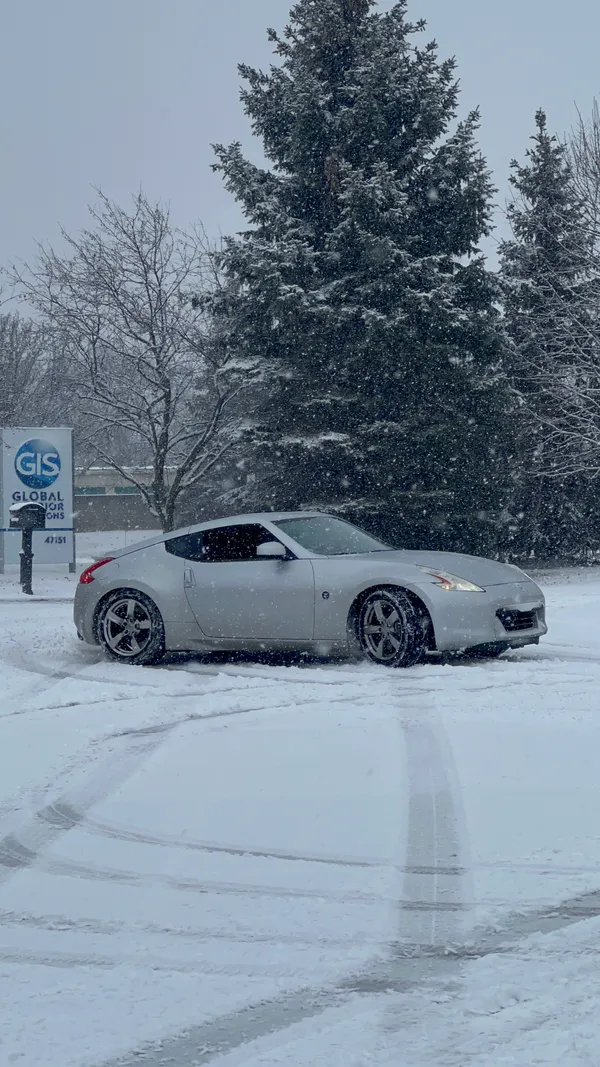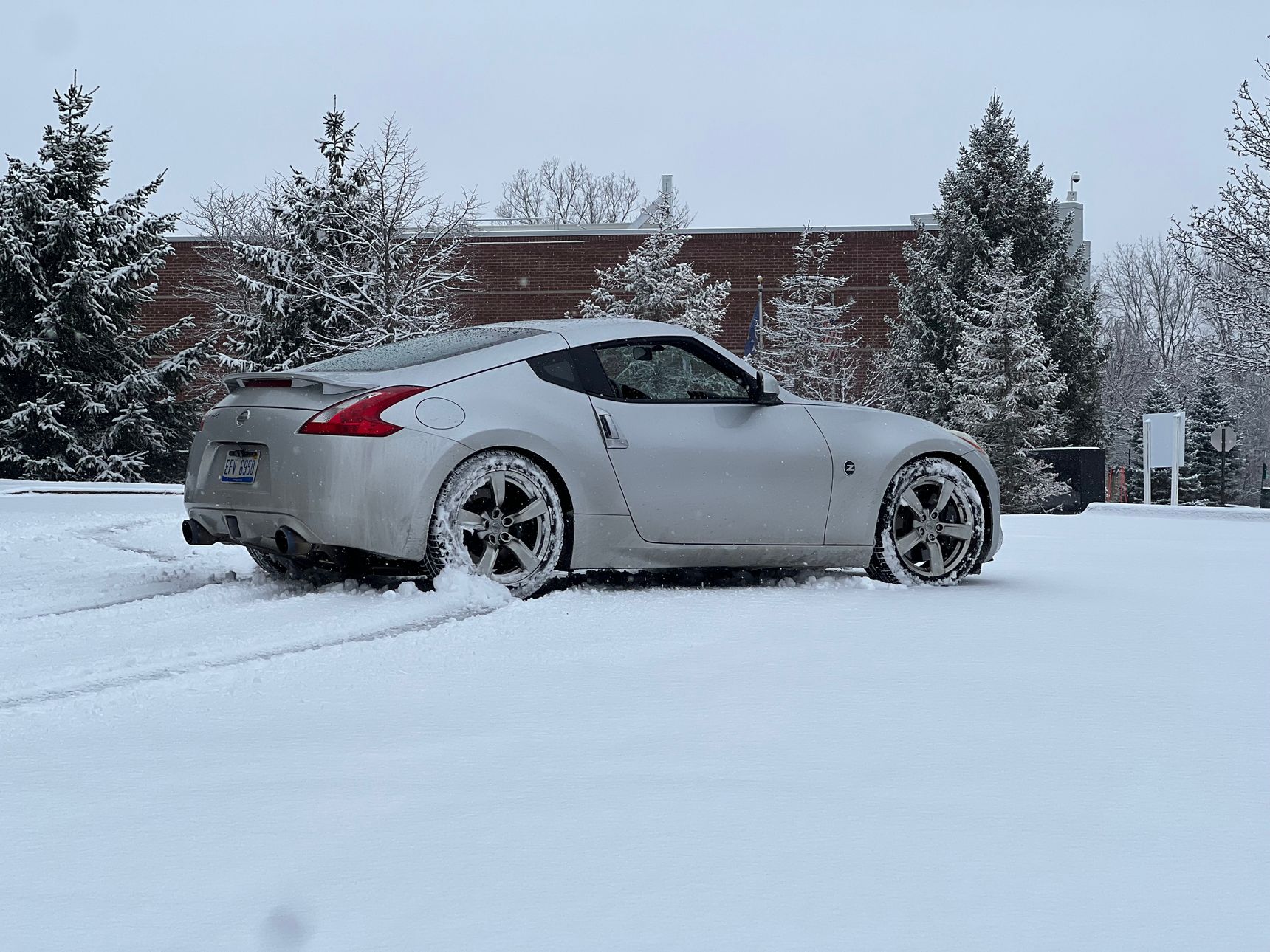
Most people will look at a small, RWD sports car and tell you that you can’t drive it in the winter. To be fair, low ground clearance is a real limitation, but I’ve found that most locations near me plow the roads pretty quickly, so it has never been an issue. The must-have upgrade for a RWD sports car (and really any car) is winter tires.
There are a few key traits that make winter tires so good in these conditions. First, the rubber compound is optimized for the temperatures in which snow and ice occur (think sub-40°F). Where a summer tire would harden like a rock, the winter compound remains compliant. Second is the tread design, which has far more sipes (thin slits in the tread that create sharp edges) that help the tire “bite” into hard-packed snow and ice. These also help by collecting snow in the tread, allowing for snow-on-snow traction and simultaneously evacuating water on those slushy winter days. After installing winter tires (I purchased Michelin X-ice at the time), I actually found that my car had more traction capability than a lot of SUVs I shared the road with.
Driving this type of vehicle through the winter taught me a ton. I became hyper-aware of weight transfer, as small changes in where the weight of the vehicle was placed between the four tires dictated the amount of traction I had. This is true for any vehicle you’re driving, but because it is such a low-mu surface (low grip), you need every bit of traction you can get.
You also become very in tune with every input you give the car. This includes not only how much of an input you give, but also the rate at which you apply it. For example, picture yourself braking towards a stop with some fresh snow on the ground. A rapid, hard press of the brake pedal immediately sends all four tires into ABS. A slower application allows the weight to transfer forward more, putting some additional weight on the front two tires and giving you more braking traction.
This is true for every input while driving in these conditions. It’s an awesome opportunity to practice yaw control (pretending you’re in Tokyo Drift). As you apply the accelerator pedal and begin to induce some yaw, you balance on the throttle to hold that yaw angle. Occasionally, you induce too much yaw, and the instinct is to back all the way out of the throttle (maybe even hit the brakes). At speed, this will send the weight forward, reduce available grip at the rear, and likely give you even more yaw than you had before. But if you had just reduced the throttle slightly, it would’ve brought wheel speeds down (reducing slip ratio) and given you back the yaw angle you wanted.
This is the exact same thing I see in all those “leaving Cars and Coffee crash compilations,” where someone tries to show off by doing a “sick drift,” ends up getting more yaw angle than they bargained for, tips out of the throttle completely, and totals their musta… I mean sports car.
While I’ve now stopped driving my Z in the winter (entirely due to salt and not wanting my car to turn into dust), I still carry all of these lessons with me when autocrossing, commuting, and even sim racing. I miss those days when I would see the fresh snow fall and actually be excited to go for a drive.